BRAVE MAG

ShowBiz & Sports

Hot

Saturday, February 21, 2026

Discover Your Primary Psychological Defense Mechanism In 28 Questions

February 21, 2026
Discover Your Primary Psychological Defense Mechanism In 28 Questions

We all have little habits we've outgrown… or at least thought we did. Psychologists believe we all develop subtle coping patterns to deal with stress, conflict, and uncomfortable emotions. Some of us channel our energy into intense goals. Others prefer to focus on the bright side of things. None of these are "good" or "bad" — they're simply different ways our minds protect us.

Bored Panda

Today we'll be looking at different choices you make – whether it be TV shows, or your behavior in certain situations. If you're honest enough, by the end, you'll learn what psychological defense mechanism is the most prominent in your brain.

🚀 💡 Want more or looking for something else? Head over to theBored Panda Quizzesand explore our full collection of quizzes and trivia designed to test your knowledge, reveal hidden insights, and spark your curiosity.💡 🚀

Your coworker eats your labeled yogurt. What's your gut reaction?

◯ Pretend it never happened and bring extra tomorrow◯ Laugh it off and joke you'll invoice them◯ Grumble internally◯ Tell everyone in the office someone is sabotaging your lunch◯ Insist the fridge is haunted◯ Calmly explain over coffee why labeled yogurt deserves respect

Which old sitcom character do you vibe with most today?

Advertisement

Pick a weekend DIY project.

◯ Refinish a thrifted dresser◯ Organize the attic◯ Build a dartboard cabinet◯ Write an essay about the good old times◯ Work◯ Post memes online

A friend forgets your birthday. First thought?

◯ They must be planning a surprise later◯ I'm fine, birthdays are silly anyway◯ Send them reminder texts disguised as jokes◯ Bake cookies so good no one remembers the oversight◯ Rant to someone or a mirror◯ Adults skip birthdays – just move on

Rate this statement:

◯ 1 – Strongly Disagree◯ 2 – Disagree◯ 3 – Slightly Disagree◯ 4 – Slightly Agree◯ 5 – Agree◯ 6 – Strongly Agree

Pick a nostalgic snack.

Your neighbor complains about your music. You…

◯ Lower it and hum louder internally◯ Explain that jazz at 7 p.m. sharp is scientifically calming◯ Turn it off, play drums on the couch later◯ Ask if their walls are too thin◯ Put on headphones and dance in silence◯ Take it as a compliment, because your music taste isn't basic

Select a weather forecast that matches your mood.

◯ Sunny with random showers◯ Dense fog until noon◯ Blizzard◯ Gentle breeze◯ Thunderstorm heard but not seen◯ Crisp autumn day

🧠 Curious to see the rest? Take the full quiz here 🧠

Read More

From abdication to Diana, Harry and ex-Prince Andrew. A look at major British royal scandals

February 21, 2026
From abdication to Diana, Harry and ex-Prince Andrew. A look at major British royal scandals

LONDON (AP) — Holding prestige but not power, Britain's monarchy is finely tuned to public sentiment.

Associated Press

That's been evident with thedisgrace of Andrew Mountbatten Windsor, the former prince whowas arrested and held in custodyfor nearly 11 hours Thursday on suspicion of misconduct in public office.

Police are investigating whether Mountbatten-Windsorshared confidential trade informationwith the late convicted sex offenderJeffrey Epsteinwhen the then-Prince Andrew was a U.K. trade envoy. The arrest is unrelated to allegations related to Epstein's sex trafficking.

Mountbatten-Windsor has consistently denied any wrongdoing in his association with Epstein but has not commented on the most recent allegations, which stem from the release of millions of pages ofEpstein filesby the U.S. Justice Department.

ForKing Charles III, his younger brother's travails have overshadowed almost everything during his reign, now in its fourth year.

The king, who is also contending with an unspecified form of cancer, has to ensure that it is business as usual. The institution requires nothing less.

But the continuing investigations into Mountbatten-Windsor, the image of him slouched in the back of his chauffeur-driven car, seemingly shocked and confused, will not be easy to dislodge.

The king is doing his best to insulate the monarchy from any further scandals relating to Andrew and his connections with Epstein, who took his own life in a New York jail in August 2019 while awaiting trial on sex-trafficking charges.

He hasstripped Andrew of all his titles and honorsand banished him from his mansion near Windsor Castle. Now, the king says, the law "must take its course.''

Where that course leads, nobody knows. For the British monarchy, it's potentially a crisis as grave as any it has experienced since its current iteration — the House of Windsor — was born more than a century ago.

World War I

The House of Windsor was born out of conflict.

The royal families of Europe are intertwined, and Britain's is heavily German, especially after Queen Victoria married Prince Albert of Saxe-Coburg and Gotha, with whom she had nine children.

When Britain and Germany went to war in 1914, some members of the wider British royal family found themselves on opposing sides.

Britain's King George V changed the family name from Saxe-Coburg and Gotha to Windsor in 1917, and initiated legislation to strike out the titles of princes and lords who had backed the Germans.

One target was Prince Ernest Augustus, Duke of Cumberland and Teviotdale, who was a U.K. royal and also a prince of Hanover. His title was removed for being an enemy of Britain under the 1917 act, which was enacted in 1919, once the war was over.

According to the House of Commons Library, "this was the first and only time such a title has been removed in this way."

Mountbatten-Windsor is no longer a prince or Duke of York, but remains eighth in line to the throne. The current British government said Friday it is considering introducing legislation to remove Andrew from the line of succession to the crown.

The abdication

The relationship between Edward, Prince of Wales, and U.S. socialite Wallis Simpson was a headache that turned into a constitutional crisis. Simpson was twice divorced, and Edward, the heir to the throne, was destined to be ceremonial head of the Church of England, which did not allow divorced people to remarry in church.

Advertisement

The prince became King Edward VIII when his father King George V died in early 1936. He continued to say he wanted to marry Simpson, despite the opposition of the British government.

Forced to choose between duty and passion, he gave up the throne in December 1936, announcing in a radio broadcast that "I have found it impossible ... to discharge my duties as king as I would wish to do without the help and support of the woman I love."

The news was a surprise to many in Britain, though not beyond it. British newspapers had not reported on the relationship, and American magazines had offending articles cut out before going on sale.

The abdication set the monarchy on a new course. Edward's younger brother took the throne as King George VI. He was succeeded by his daughter, Queen Elizabeth II, and after her 70-year reign by her son, King Charles III. All doubled down on the idea that the monarch's primary attribute should be a sense of duty — something Edward, in the popular imagination, lacked.

Edward and Wallis, thereafter the Duke and Duchess of Windsor and suspected by some of Nazi sympathies, were sent to the Bahamas, where he served as governor. After the war they mostly stayed away from Britain, living a life of nomadic luxury.

Princess Diana's death

The death of Princess Diana — the ex-wife of Charles — in a car crash in Paris in 1997, at the age of 36, shocked the world and left her family, including sons William and Harry, then 15 and 12, in mourning.

The strength of public feeling caught the royal family by surprise. Mounds of floral tributes piled up outside the gates of Buckingham Palace and Diana's home at Kensington Palace to mourn a princess who had been ostracized by the royal family after her divorce from Charles in 1992.

The queen was at Balmoral in Scotland on her summer holiday with her husband Prince Philip, Charles, William and Harry. The family kept their grief private and stuck to routine — taking the ashen-faced boys to church on Sunday morning — and the queen did not issue a statement for several days.

She was advised to make a public display of grief by Prime Minister Tony Blair, who perfectly caught the public mood with his own tribute calling Diana "the people's princess."

After newspaper headlines urging "Speak to us Ma'am," and "Show us you care," the queen made a live televised address to the nation on the eve of Diana's funeral.

"What I say to you now, as your queen and as a grandmother, I say from my heart," the queen said, acknowledging the country's grief, praising Diana and promising to cherish her memory.

The trouble with Harry

Not long ago, Andrew had been trying to regain favor with the family, benefiting indirectly from the trouble with Prince Harry.

Harry became estranged from his father and older brother, Prince William, heir to the throne, when he and his wife, Meghan, stepped down from their working roles and moved to California in 2020. The couple famously aired their grievances with the royal family in a tell-all interview to Oprah Winfrey and a revealingNetflixseries. Harry then fueled the tensions by revealing personal conversations inhis memoir, "Spare."

Harry also broke from royal protocol in turning to the courts to sort out his legal problems. He became the first senior royal to testify in court in more than a century in his successful phone hacking lawsuit against the Daily Mirror.

A failed legal effort to restore his police protection detail that was stripped from him when he left royal work, though, was seen as an attack on his father's government.

When the courts finally rejected the lawsuit, it provided a chance for a reunion between father and son. The two shared a cup of tea at Charles' London abode, Clarence House, in September 2024. It was their first meeting in over a year.

It lasted less than an hour.

Associated Press writers Jill Lawless and Brian Melley contributed to this report.

Read More

Willie Colón, salsa music pioneer and political activist, dies at 75

February 21, 2026
Willie Colón, salsa music pioneer and political activist, dies at 75

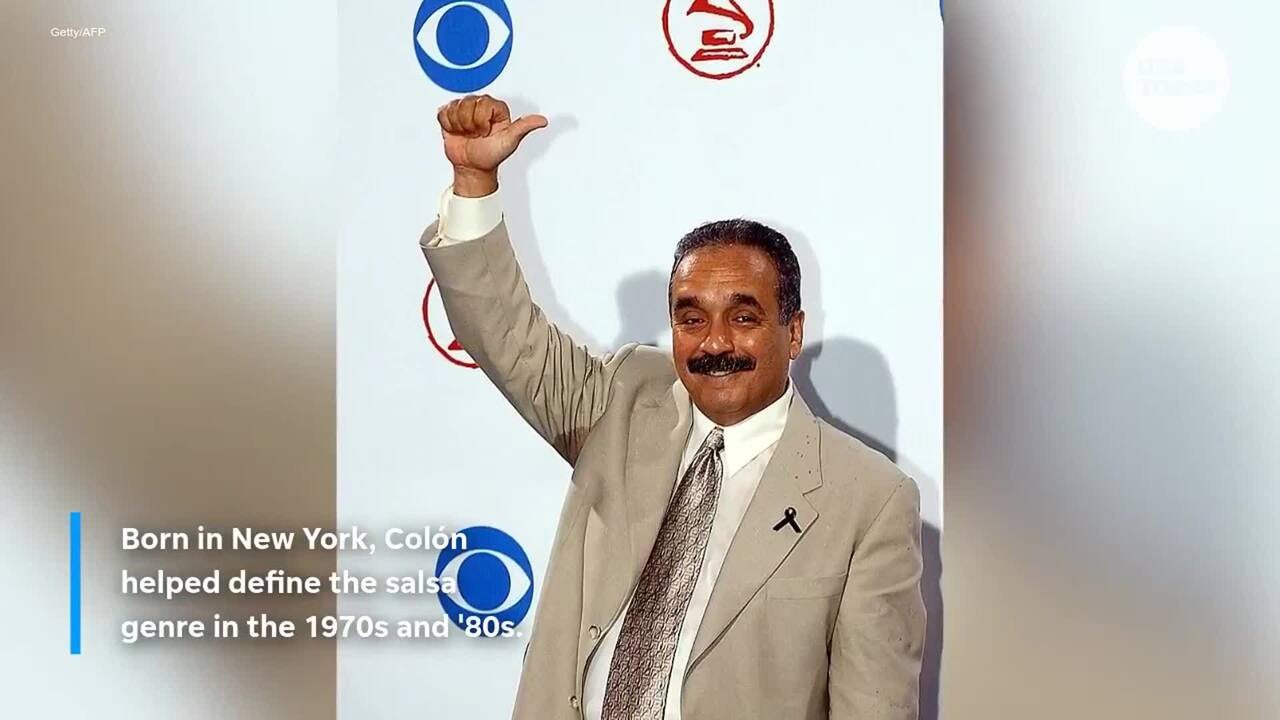
Music superstar Willie Colón, who helped define the salsa genre in the 1970s and '80s, died on Saturday, Feb. 21, his family confirmed on social media. He was 75.

USA TODAY

"It is with profound sadness that we announce the passing of our beloved husband, father, and renowned musician, Willie Colon. He passed away peacefully this morning, surrounded by his loving family," a statement shared on hisFacebook pagereads.

"While we grieve his absence, we also rejoice in the timeless gift of his music and the cherished memories he created that will live on forever," the statement reads. "Our family is deeply grateful for your prayers and support during this time of mourning. We kindly ask for privacy as we navigate our grief."

Throughout his career, the New York-born musician was nominated for 10 Grammy Awards and received a lifetime achievement award at the Latin Grammys in 2004.

He collaborated with music icons, including Héctor Lavoe and Celia Cruz. Alongside Rubén Blades, he recorded the 1978 album "Siembra," the best-selling salsa album of all time.

Legendary musician Willie Colon arrives at the BMI's 13th Annual Latin Awards at the 18th Street Pavilion on April 7, 2006, in New York City.

Born in the South Bronx of New York City in 1950 and raised in a Puerto Rican household, Colón took to music at an early age, learning to play the trumpet and trombone. By the time he was a teenager, he landed a record deal with Fania Records and released his debut album, "El Malo," in 1967 before turning 18.

Aside from music, he was a proud activist who was appointed a representative advisor to former New York City MayorMike Bloombergand a liaison to the New York City Latin Media & Entertainment Commission in 2003, a role he served for over a decade.

Advertisement

Colón was also a member of the Latino Commission on AIDS and the Congressional Hispanic Caucus Institute, as well as the ASCAP national board, becoming the first person of color to join.

He also made time for acting with roles in films like 1982's "Vigilante," 1983's "The Last Fight" and 1994's "It Could Happen to You." On television, he guest-starred as a drug dealer in a 1987 episode of "Miami Vice" and played himself on a 1992 episode of "The Cosby Show."

"From those roots grew a profound devotion to culture, heritage, and truth. He did not simply represent his community; he amplified it," Craft Recordings said in a statement shared with USA TODAY. "Beyond music, Willie was a voice for his community — an activist and a public servant. He understood that rhythm could move people, but also hearts—and that songs could spark change."

With over 40 albums, he captivated listeners with his portrayal of the Puerto Rican experience.

Last year, he appeared in the music video forBad Bunny's "Nuevayol," off the Super Bowl headliner's Grammy-winning album "DeBÍ TiRAR MáS FOToS."

(This story was updated to add a video and resolve a typo.)

This article originally appeared on USA TODAY:Willie Colón, salsa music pioneer and political activist, dies at 75

Read More